Showing posts with label Collared Dove. Show all posts

Thursday, 11 January 2018

Greenfinch revival?

 The garden was busy with feeding birds today.The female Blackcap put in another appearance and Blackbird numbers were still quite high. We are still missing the hoped for for visits from Bramblings and Siskins and one of the erupting Hawfinches would be a great treat.

 The number of Greenfinches visiting gardens has been greatly reduced in the last few years. This is due to the disease trichomonosis. The birds become sluggish and unable to swallow food. There seems to be a small recovery, at least in my garden with several spick and span birds around each day. 

 The number of House Sparrows suffered a huge reduction, particularly in large urban areas and 10 years ago we hardly had any around in the garden, but hey are now doing rather better. 

Goldfinches numbers seem to be going from strength to strength.

 When I first put up the mesh feeder it attracted very little attention but now it is one of the first to be emptied and often is crowded with several species.

Goldfinch

  A strange winter, very little really cold weather and Hebe in flower during January seems rather odd.

Goldfinch and Greenfinch on the mesh feeder.

 Collared Dove


Monday, 8 January 2018

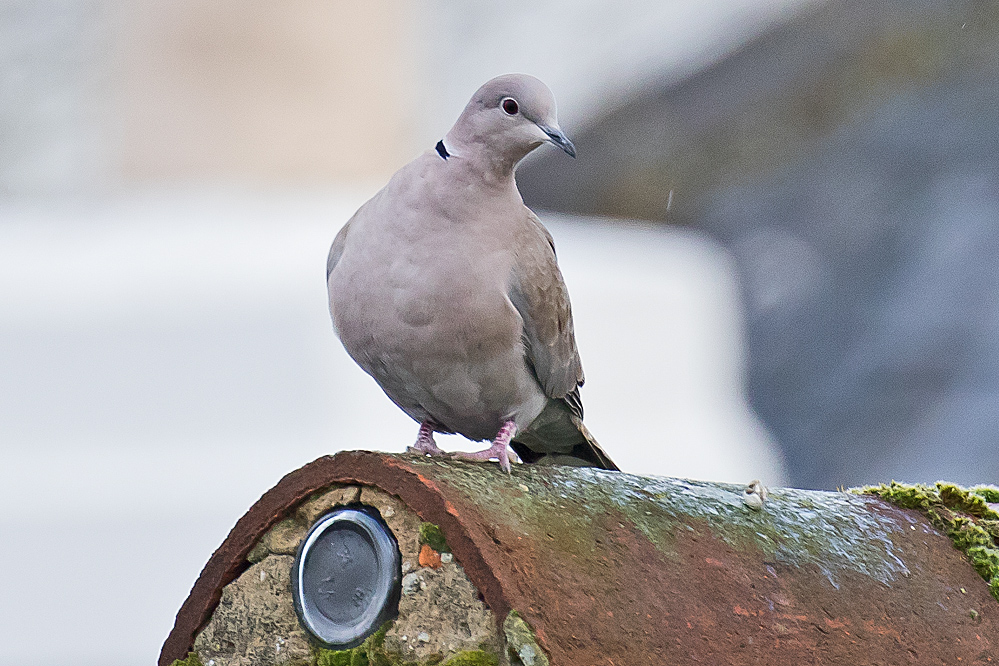
Collared Dove Success

I wonder how many birders of today remember twitching a bird that has now become one of the commonest garden birds in the UK. It was first recorded in Lincolnshire in 1952 and bred in Norfolk in 1955 and by the production of the first "Atlas" (1968-72) it was recorded in 69% of the UK's 10 km squares. with an estimate of 30-40,000 pairs.The distribution has now reached 83% with a population of around 990,000. The spread across Europe was no less remarkable. At the beginning of the 20th century it had a foot hold in Europe in Turkey and parts of the Balkans. It arrived in Hungary in 1932, Czechoslovakia in 1936, Austria in 1938, Germany in 1943 and the Netherlands in 1949. It didn't stop in the UK and wild birds have been recorded in Iceland and possibly the USA but introductions muddy the waters. I guess in 50 years time we will be at home with all the Southern Herons that have and are now colonising the UK, but I wonder how many species that were the staple diet of my birding youth with still be with us. The first article in British Birds on the spread of the Collared Dove was in Vol 58, no 4, 1965.


Friday, 31 March 2017

Lazy Photography

Some lazy, armchair photography, sliding doors open and listening to 15 to 1. Watching the garden birds coming to drink and bathe.

A very wet Robin.

A tatty Blue Tit, but I'm not sure what is the problem.

Coming down to the feeders, about four feet away.

Cock House Sparrow

Dunnock

Blackbird, down for  drink.

Blackbird collecting food.

This was from the other side of the house, though a closed window. I had a quick dip in our exercise pool, trying to improve my leg muscles, came out, showered and sat at my desk. As I looked out of the window all the finches left the feeders in a panic, and the reason was staring me in the face. A handsome male Sparrowhawk.

Back to the armchair to watch a Wren collecting nesting material from round the pond.

Cock Chaffinch

Hen Chaffinch

Thsi Collared Dove is a short tailed version, perhaps having lost it to a local cat, or even the Sparrowhawk.

This is the full tailed version.

A smart Blue Tit.

Blue Tit and Goldfinch go head to head.

Tuesday, 16 February 2016

More Garden Blackcaps

 Lots of Blackbirds still around in the garden, most seem to be males. Some, like the one above have duller bills and slightly brownish plumage, these may be continental birds or possibly first winter birds.

 There are still three Blackcaps feeding under on the ground, gleaning the bits dropped by the finches on the feeders above.

 Collared Doves join the throng to clean up the left overs. 

 Joining in today were two Robins, not a good situation, as they spend to much time squabbling to make much of an impression. 

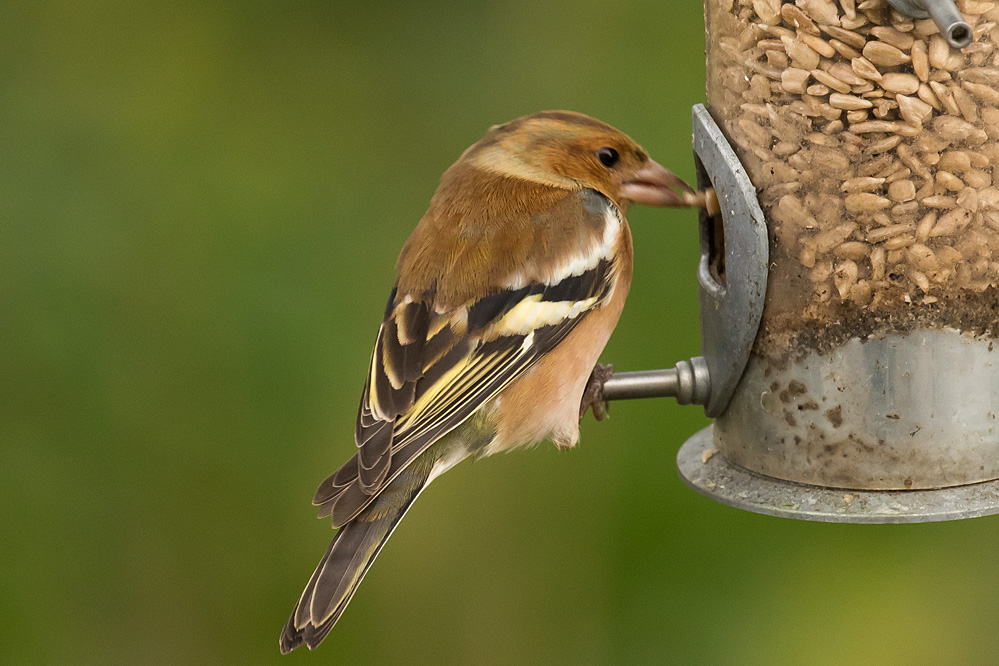
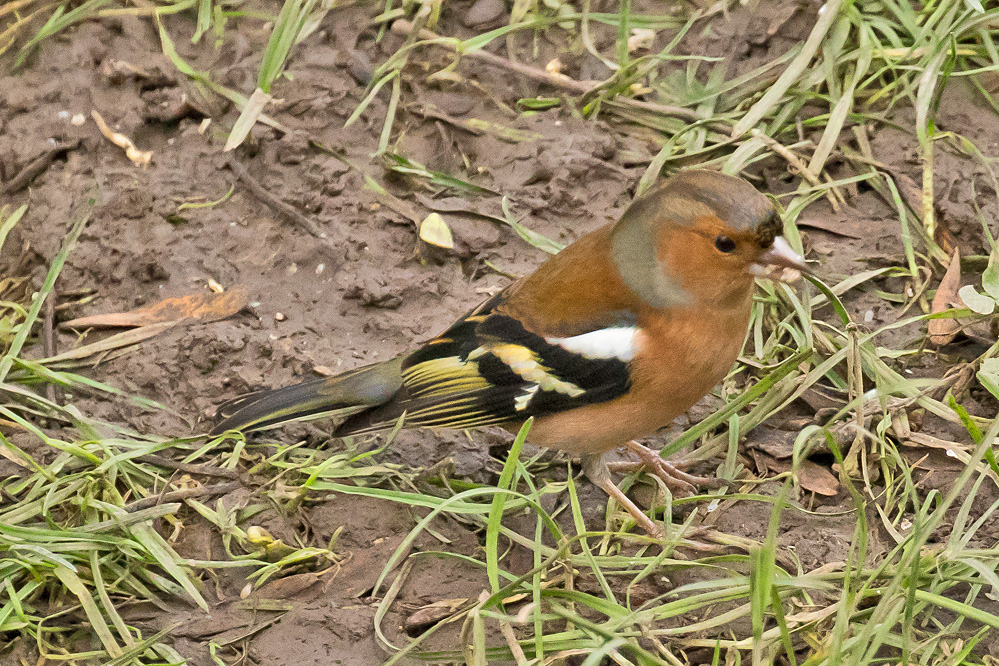
 Chaffinches spend more time on the ground than on the feeders, and areby now the males are quite smart.

 I sat with the a sliding door open and managed quite a few shots of the female Blackcap. Although there were two males around they were much more easily spooked and the slightest movement of the lens had them scurrying off. 

 One of the Blackbirds with a bright yellow bill. I'm still amazed that they are feeding as close to each other as they are in such a tolerant group.

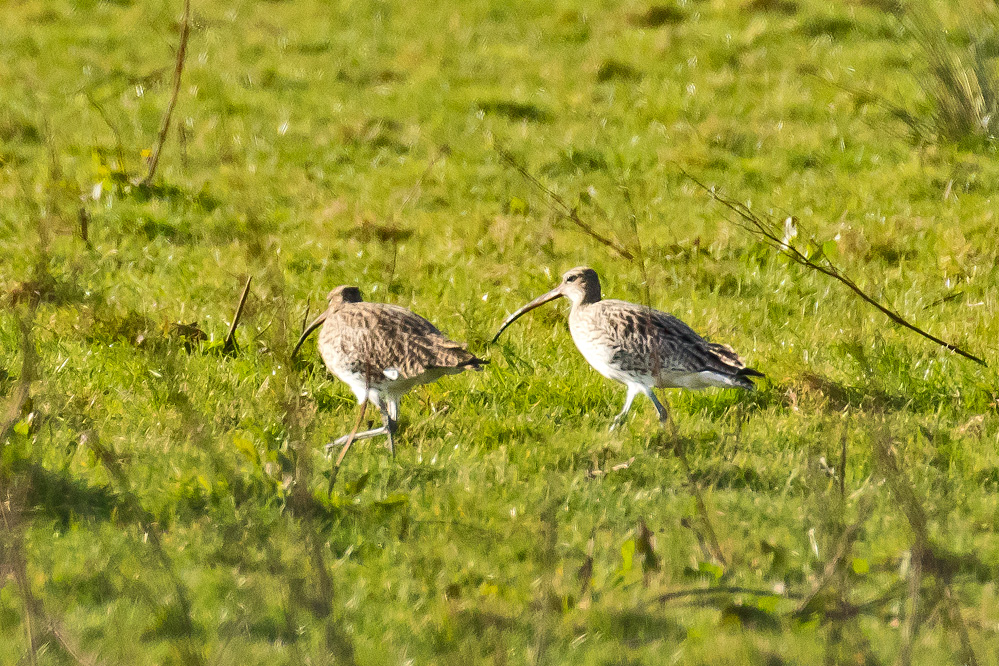
 It was good to see groups of Curlews out on Worth Marshes. These are probably wintering migrants from further north.The British breeding population is in trouble.

 The UK breeding population of Eurasian Curlew are declining rapidly. Between 1995 and 2011 the UK Breeding numbers have shown a decline of 45%. The decline is variable between regions Local studies have implicated nest predation and low breeding productivity as causes of decline. However, changes in vegetation structure through changing grazing pressure in the uplands may also have an effect of habitat suitability. 

 At the Restharrow Scrape most birds were huddled round the edge to avoid the cold wind. One Little Grebed ddi come quite close on a fishing expedition.

It caught quite a decent sized |Three Spined Stickleback. I didn't see the end of the story as the heavens opened and the wind meant that the windows needed to be rapidly closed.

Tuesday, 15 December 2015

Garden Shoot

Lots of birds around inthe garden today,but very little light, so I decided to muck around and see how usable images taken at ISO3200 would be.

After a few years when the number of Collared Doves visiting the garden had dropped to just the odd one or two they are now back to bigger groups.


The Wood Pigeon is one of the most successful birds in the country, making full use of the vegetables grown year round and the amount of garden feeding stations available.


Not doing so well for the last few of years are Greenfinches. Trichomonosis is a disease caused by the protozoan parasite Trichomonas gallinae. It has been recorded in a number of garden bird species and is widely acknowledged to be the causal factor in the rapid decline of the British Greenfinch population that was first noted in late summer 2006 

This particular bird did feed for a long time, but it was very fluffed up and not very active. I can't say that it was sick but I was somewhat worried by it 's very static visit.

The flock of Goldfinches were as usual noisy, quarrelsome and very active, flying off, every now and again, returning after a few minutes.

Every now and again there would be a Chaffinch on one of the feeders, but usually they were on the ground, doing the tidying up job for the Goldfinches.

At this time of year the number of Blackbirds increases, possibly including some continental migrants. The bird above is probably home grown, the males of the continental birds tend to be browner and have dull bills, 

One of the Chaffinches feeing under the feeders.

Goldfinches have no problems landing on the feeders and manoeuvring from one feeder to the next.

With Chaffinches, they normally fly at the feeders, but fail to land. I'm not sure how often they manage to take a seed, 

Here are five of the ten Collared Doves feeding in the garden. They may be a common bird, but I still remember when they firs reached the UK, having spread right across Europe in the first half of the 20th Century. Not a sign of global warming, but a sign of agricultural change.