Showing posts with label Curlew. Show all posts

Sunday, 28 January 2018

Glowing in the evening sun

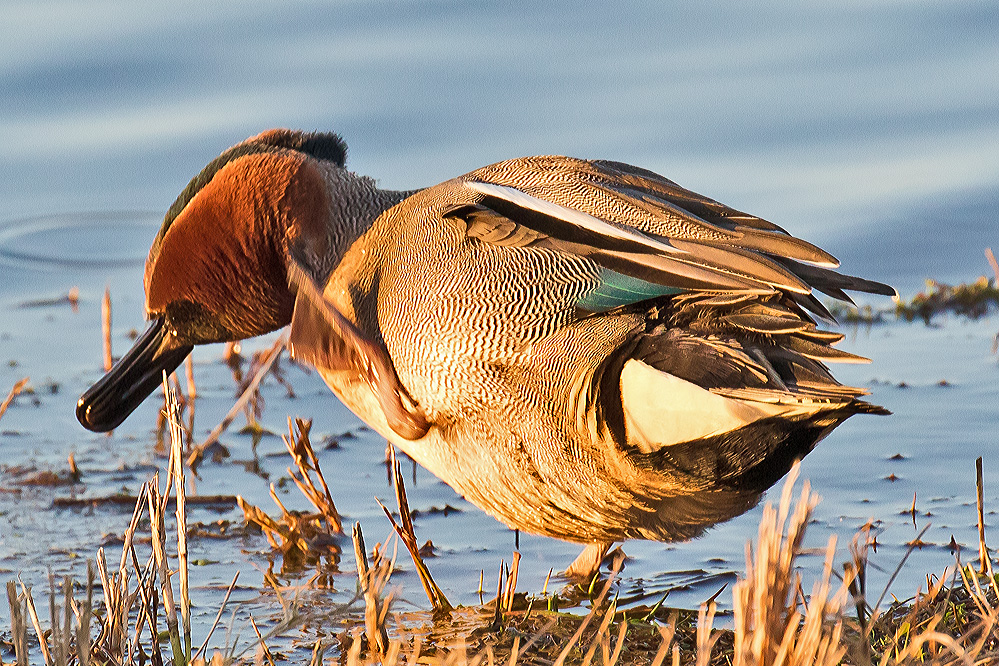
Evening sunshine at Restharrow Scrape brings a warm glow to the birds and vegetation. At the moment the main species to see is the Eurasian Teal with a few Gadwall and Shoveler dotted around. After watch Chaffinch, Greenfinch and Goldfinch for the RSPB Garden watch this was a real change.
 
Restharrow Scrape (Phone photo)

 Restharrow Scrape (Phone photo)

Restharrow Scrape, with group of Gadwall and Teal (phone photo)

Restharrow Scrape, big island with mainly Teal(phone photo)

Restharrow Scrape, Teal (phone photo)


Drake Teal

Drake Shoveler, sleeping

Drake Teal

Duck and Drake Gadwall


Drake Teal and Drake Gadwall

Duck Gadwall preening

Drake Gadwall

Drake Gadwall Preening

Drake Teal, having a shake

Drake Teal,

Drake Teal, scratching

Drake Teal, preening

Back end of a Eurasian Curlew

Eurasian Curlew

Duck Teal

Duck Teal preeing

Wednesday, 2 March 2016

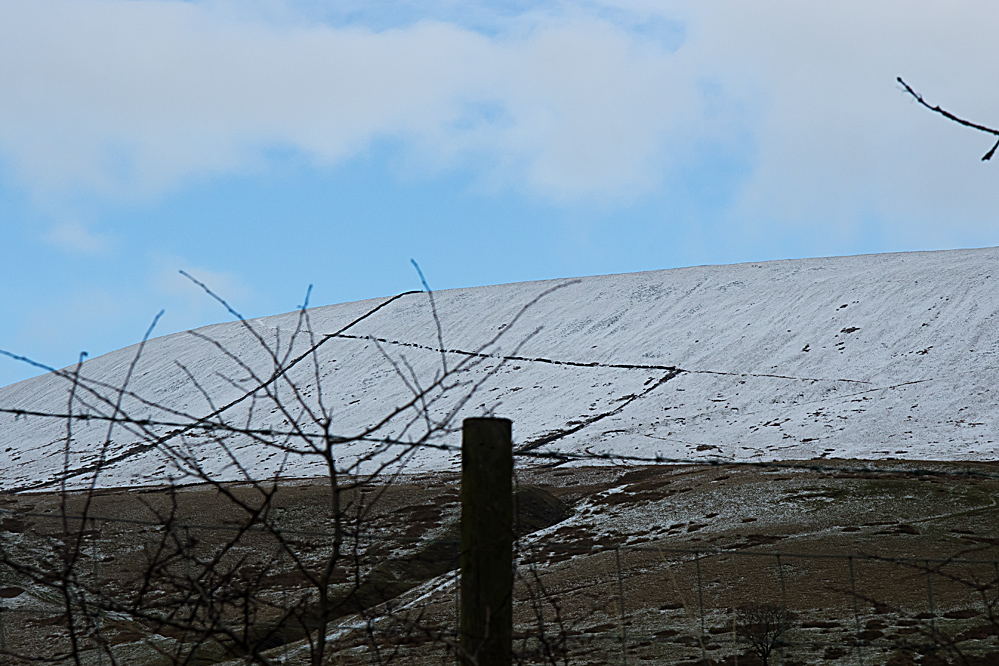
Snow on the Hills

I wasn't required as a driver today but unfortunately to weather, sleet followed by snow, rain and drizzle, in that order made a walk along the Ribble, in search of Dipper and Merganser very unattractive.

A look out of the window, in ther bedroom we are sleeping in, gave a distant view of the famous Pendle Hill, between the roofs opposite.

Although it was only a sprinkling of snow I thought a closer look was merited. 


The fields were very wet, but I got quite close, but wasn't tempted to make the trek to the top.


Mike Watson, a local birder and Birdquest leader makes regular trips to the peak and there are some fabulous pictures on his blog. In spring Mke will be up there finding Dotterels, the star bird of these hill tops when small trips make a few days stop over on their way north.

Not far away, towards Bashall, I found a large flock of Curlews, feeding in one of the wet fields. There weren't exactly shy, but the moveed up the field when I parked, making the views quite distant.

The UK holds about a fifth of the world breeding population but numbers are declining rapidly. Between 1995 and 2011 there was a decline of 45% in breeding abundance. Detailed local studies have implicated nest predation and low breeding productivity as causes of decline. Also, changes in vegetation structure through changing grazing pressure in the uplands may also have an effect of habitat suitability. 


There are wintering birds and it was interesting to watch the close attendance of quite a few Black-headed Gulls I assume that the gulls make use of the Curlews worm finding ability and occasionally grab some of the action.   A the back were a flock of Starlings, but they seemed independent of the Curlews.

Monday, 29 February 2016

Lancashire Hotpot

I'm having a few days in Lancashire while my Grandson is doing some work experience with the RSPB. Pete, Jacks dad and my oldest is away in Mexico, leading for Birdquest, so I'm Helping him get from place to place. Today Jack was in the RSPB office in Lancaster so I took the opportunity to have a look around Morecambe bay and the grazing marsh around Cockerham.

Some of the 5000 Pink-footed Geese at Cockermouth


Waders and Ducks in Morecambe Bay.

 Wigeon

 Black-tailed Godwits

 Redshank

  Redshank

 Oystercatcher and Teal

 Curlew

 Curlew

Hest Bank as tide comes in.

 Waders, Mainly Knot.

 Knot

 Knot

 Knot

 Knot and Oystercatchers

  Knot and Oystercatchers

 Curlew

  Curlew and Wigeon

Black-tailed Godwit

Pintail