Showing posts with label Wood Pigeon. Show all posts

Tuesday, 2 January 2018

Dover's "Key to England"

Dover Castle in the Gloom 

A few birds from the garden in the sunshine a couple of days ago

Wood Pigeon 

Starling in winter garb. 

 
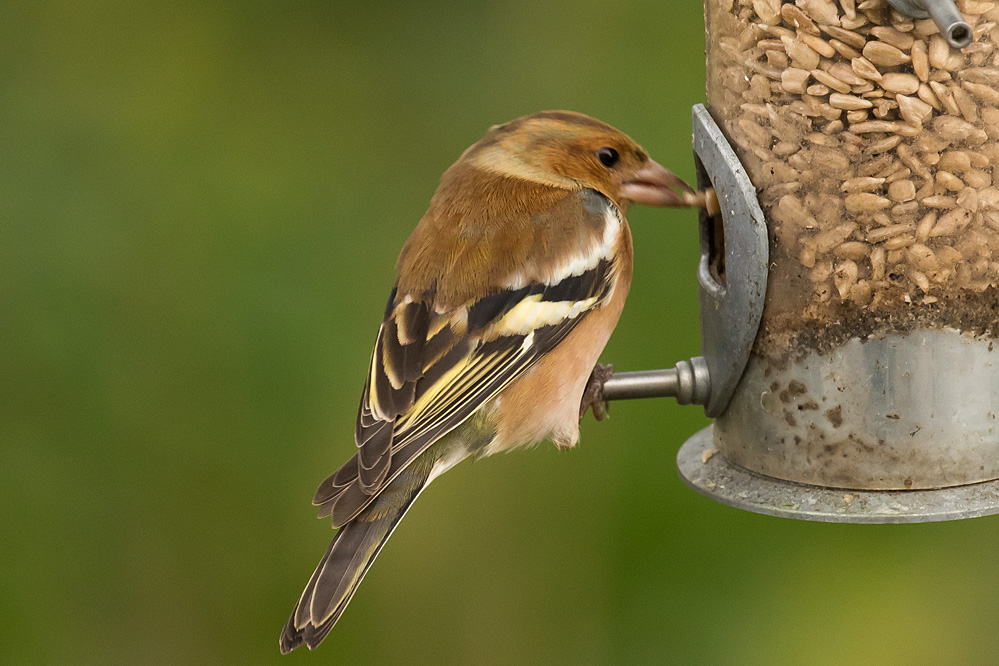
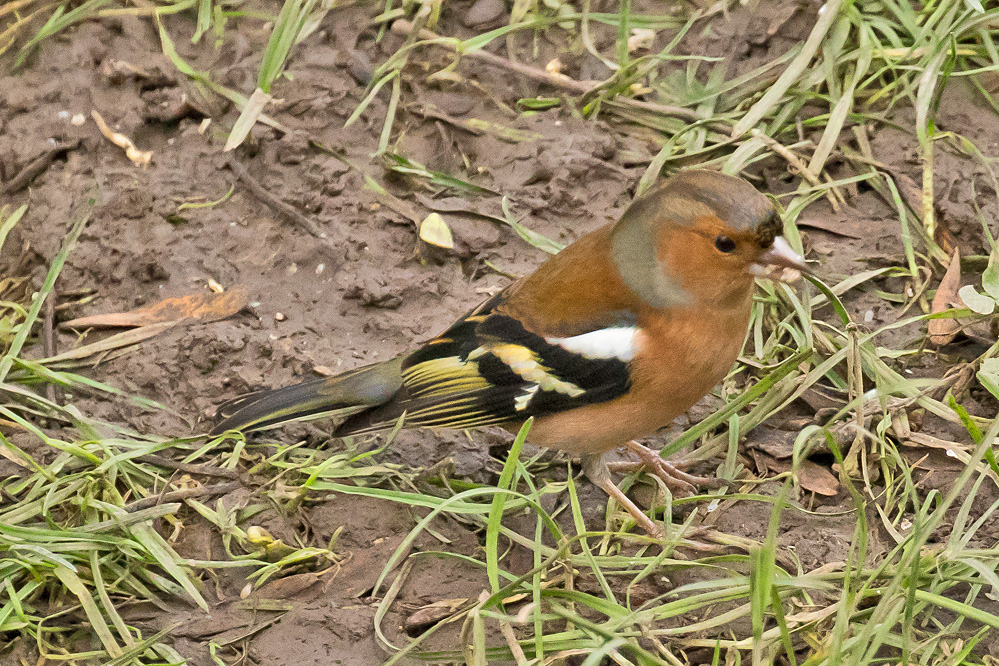
 Chaffinch getting into summer plumage

Female Blackbird

Tuesday, 15 December 2015

Garden Shoot

Lots of birds around inthe garden today,but very little light, so I decided to muck around and see how usable images taken at ISO3200 would be.

After a few years when the number of Collared Doves visiting the garden had dropped to just the odd one or two they are now back to bigger groups.


The Wood Pigeon is one of the most successful birds in the country, making full use of the vegetables grown year round and the amount of garden feeding stations available.


Not doing so well for the last few of years are Greenfinches. Trichomonosis is a disease caused by the protozoan parasite Trichomonas gallinae. It has been recorded in a number of garden bird species and is widely acknowledged to be the causal factor in the rapid decline of the British Greenfinch population that was first noted in late summer 2006 

This particular bird did feed for a long time, but it was very fluffed up and not very active. I can't say that it was sick but I was somewhat worried by it 's very static visit.

The flock of Goldfinches were as usual noisy, quarrelsome and very active, flying off, every now and again, returning after a few minutes.

Every now and again there would be a Chaffinch on one of the feeders, but usually they were on the ground, doing the tidying up job for the Goldfinches.

At this time of year the number of Blackbirds increases, possibly including some continental migrants. The bird above is probably home grown, the males of the continental birds tend to be browner and have dull bills, 

One of the Chaffinches feeing under the feeders.

Goldfinches have no problems landing on the feeders and manoeuvring from one feeder to the next.

With Chaffinches, they normally fly at the feeders, but fail to land. I'm not sure how often they manage to take a seed, 

Here are five of the ten Collared Doves feeding in the garden. They may be a common bird, but I still remember when they firs reached the UK, having spread right across Europe in the first half of the 20th Century. Not a sign of global warming, but a sign of agricultural change. 

Friday, 24 July 2015

Pecker In a trance

I couldn't resist talking a few pictures from the open window, while birds were coming to drink and eat jsut outside the window. A young Blackbird and a Chaffinch come to drink.


Even more fun is a young Great Spotted Woodpecker. It came down to eat and then, as often happens, it shuffled up the feeder and went into a trance for a frew munutes, before feeding some more, and then coming down to drink. I once walked slowly up to a feeder with a "tranced" Woodpecker on it, and just gently touched it's back before it woke up and flew off.


The solid red cap shows that it is a juvenile. 

Having a rest, before moving up and going into a trance.

It sat in this pose for about five minutes before waking up and carrying on with the job.

Woodpigeons are always on hand to hover up under the feeders.


Apart from Pigeons birds can't such up water, so the get as much in their beaks as possible, before lifting up their heads to swallow.
We lost most of our House Sparrows a few years ago, as did many areas. When we saw one or two back in the garden we set up a feeding station right nest to the house in a pyracanthus bush that the Sparrows had been using. At first they were quiteshy when we went out of the door.Now they just sit there. I did fill up their large fatball feeder a couple of days ago, but already it is well down. This is due to the fact that quite uninvited a female Blackbird now spends much of her time on the feeder.

Despite being "just a Sparrow" I think the males are handsomwe chaps. He's moved down to get at the remaining fat balls.

This young Blackbird, still showing the gape, is searching through some pruning litter that Pam is working on.They are very tame in the garden.,


A female House Sparrow joins in the search for tit bits on the ground by the feeders.

An adult females is still collecting food. I knowe they've had two broods, and despite the virtual plague of cats we have surronding the garden, most have fledged.

Friday, 10 January 2014

Golden Invasion

I've had this book on the shelf for dozen or so years,but so far I haven't been able to use it in the field.It is mainly an altlas, but what first drew me to it was Martin Woodcocks few plates at the beginning.


I was saddened to learn last night  that John Ash died on Monday, and his wife died just three days earlier. Both of them were living in care homes.I guess that I'll treasure this book just a little more now, now that the man that conributed so much to the knowledge of the birds of Somalia is no longer with us.Whether or not I ever make it to Somalia is another thing.

Today the peaceful conditions allowed the garden birds to feed comparatively unhindered, with no rain and only a gentle breeze.
It was a continuation of the golden invasion that started a few days ago, the trees were alive with the calls of Goldfinches and my feeders were emptying at a rate that would raise even Harry Rednap's eyebrows.

They found one perch already taken by a Chaffinch on this feeder.

a Gowd Spink in Yorkshire

Also known as a Jack Nicker

or, appropriately, a Thistle Finch

Always waiting to pick up the spilt seed, and judging by their plumpness pretty successful. there are quite a few Wood Pigeons around.

Some of the male Chaffinches are getting their summer tones coming through, Spring must be on the way!


Why is it that chimney pots always look the right place to see Starlings?

Blue Tits are already investigating the houing situation in the garden. Perhaps this year a pair will choose one of the two boxes I've got with cameras set up.

Still lots of Blackbirds around, although this one has a definite brown tinge the beak and eye ring are very yellow. I wondewr is this a first year male?

While the Finches remain on the feeders to eat the seeds the tits normally take the seed off to a branch and hammer it away from the feeders and then quickly dive in for the next seed.

Pigeons are the only family of birds (that I know) that can drink like this. Like up they can suck the liquid down. Other species have to get a beakful and the put their heads up to swallow.

ALthough the Starlings seem to spurn the sunflower seeds they are more than happy to go onto feeders with either peanuts or fat balls.