Showing posts with label BTO Atlas. Show all posts

Wednesday, 21 April 2010

Gold top

I did a bit of atlas work today on one of my tetrads. The first thing I discovered was that Little Owls are like buses, you wait ages for one and then three come along.

When I got to the tetrad I was walking round I came across this Little Owl sitting in a tree at the start of the first footpath I was aiming for. This is the third site I've seen Little Owls in the last two weeks, having waited ages for the opportunity to photograph one in good light I've now had three chances, one of which I was too slow to accept and two where I got reasonable images.
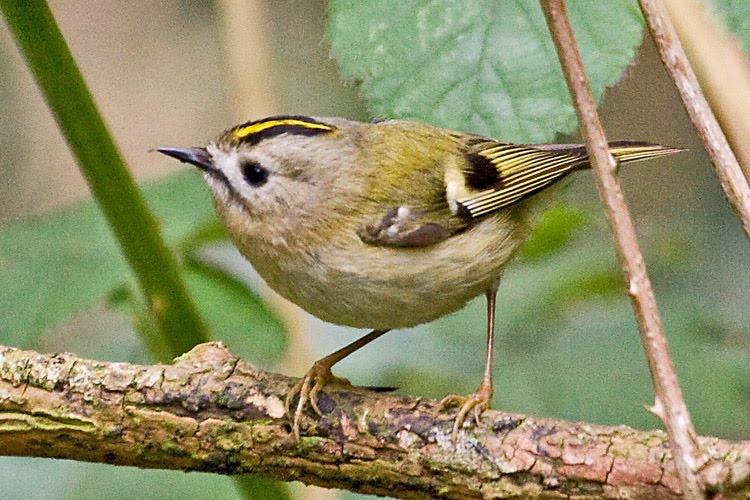
In a nice strip of mixed woodland I was pleased to discover that I can still hear singing Goldcrests OK, in fact I heard at least six individuals. They are fantastic little birds, although at times they can vanish into Yew trees and only there high pitched voice betrays their presence.

Perhaps not quite as stunning as their close relative, the Firecrest, they are still one of our more charismatic birds.

As well as lots of Great and Blue Tits this piece of woodland also has a few pairs of Coal Tits, but alas I haven't yet found Marsh Tits in their, and like most of east Kent, although the wood looks suitable it is a Nuthatch free zone.

Several Chiffchaffs were singing, normally high up against the light, occasionally low enough to get some detail.

Apart from the song, they are very similar to Willow Warblers, but they are more of a Woodland species, while Willow Warblers are normally in areas of heathland or more scattered trees. Willow Warblers have longer wings, the shorter wings of the Chiffchaff are apparent in these pictures. In addition the Willow Warbler normally has paler legs, and a more pronounced supercillium.

Once upon a time it would have been unthinkable to find a pair of Buzzards in a tetrad in Kent, but not now. I would think that many atlas workers will have this experience this spring, a pair of Buzzards circling over a wood in the area. It is certainly a marvellous addition to the birding experience.

Wednesday, 7 April 2010

Was Andy Warhol right?

The local rubbish dumpers provided a interesting background as I met Yvette Austen and a cameraman from BBC South-East.

As we were going to see the beauty of the white cliffs of Dover where we discussed the return of Ravens to the south east of England it was a pity that this was the first view.

When I received a call from Dawn Bulmer of the BTO asking if I'd be willing to talk to one of the reporters from BBC South-East about the Ravens that nested near Dover my first instinct was I'd love to but they really should talk to the National Trust manager, Simon Ovenden, Unfortunately both Simon and Rob from the NT were otherwise engaged, but Simon was happy that I talked to them.

As you would expect the elusive Ravens failed to put in an appearance while we were there, but we did have a little chat on camera about the fact that they nested somewhere along the cliffs last year and were around again this year. Yvette had taken the precaution of visiting the Wildwoods Trust on the way, and getting some footage of some of the Ravens they have there.

The very short film did acknowledge the NT and my "banner" on the screen did get a couple of seconds advert for the Kent Ornithological Society on it. Looking at the film you certainly wouldn't think that I'd made an effort to brush my hair, the wind as usual making it look like a haystack! I did try and get a plug for the BTO atlas project but that fell by the wayside. All in all an interesting experience and it was good to see some publicity for a conservation plus. Clearly the reduced persecution of many species is having a positive affect on the birds of Kent and Ravens are one of the beneficiaries. At the moment the programme can be seen here, (It's about 17 minutes in) but I assume this will change tomorrow evening.

Saturday, 20 February 2010

BTO Survey TTV - TR 34B - Buckland/Buckland Valley

I did the last of my 5 TTV's today, in what was glorious weather. The only problem was the warmth of the sun quickly got rid of the frost, so many footpaths turned from hard to sticky mud. This 2km square stretches from the centre of Dover up towards Guston and the Whitfield industrial estate and is about 75% built up, with some farmland in the north and some scrubby downland between the housing estates.The River Dove flows through the south of it. There were not that many species but a few highlights. Among quite a few Black-headed, Common and Herring Gulls feeding over the fields just south of Guston, I found a first winter Mediterranean Gull. Other farmland birds were few, but the hedgerows seemed to ring to the call of "teacher teacher" as Great Tits enjoyed the sunshine. The Charlton Cemetery is a haven for small birds and the pride of place went to an elusive Firecrest, that showed properly just once but kept buried in a dense conifer bush the rest of the time.

When I did the early survey I made the mistake of just crossing the river and not walking along the path, but today I did follow the river for a few hundred yards. I was rewarded with three Chiffchaffs flitting through the vegetation over the water.

These little warblers are becoming a commoner sight in winter, long, long ago, when I was a lad, they were pretty well totally summer winter visitors only, the population moving to the countries around the Mediterranean for their winter holidays.

All of the TTV's I do are with out any substantial area of water, so water birds haven't features much on my surveys, this Moorhen was the first I've had in any of my visits this year.

As well as the Moorhens there were a good number of Mallards on the river. These were joined by a Little Egret. The Mallards were being fed by one of the locals who informed me that the Egret frequently sat on his garden fence, I don't know if he had goldfish in the garden!.He also told me a Kingfisher was regular on this stretch of the river , but I failed to see it today.

The last surprise was a female Teal lurking on the sheltered side of the water. It didn't come for bread and seemed shy, flying 20 yards down the river when I pointed a camera at it. The walk back up through the Buckland Valley estate is very steep, and by the time I got to the very sticky footpath near Frith Farm I was running on empty. All in all an enjoyable, and muddy walk round, made all the better by seeing the last 45 mins of Man U losing!.

Wednesday, 17 February 2010

Badger time

A Badger dropped by, early enough (just after midnight) for Pam and I to watch him polishing off his nightly peanuts.

I said him, although I'm not sure if it's a male or female, it certainly isn't the same small female that we saw most often last year.


It might look as if it's got a Chinese takeaway but this was the handiest non breakable container I could find when I put the peanuts out, the do chuck their plates about a bit to get the last bits out.

I did one of my remaining TTV's, centred on Whitfield, and so many of the birds made it easy by singing, especially Robins and Dunnocks. I was a little disappointed as overall there wasn't that much to write home about. Noticeable today was the number of noisy House Sparrows around, let's hope it's a prelude to a revival. I was also surprised to find that some of the foot paths, in low lying edges of fields were still quite deep in snow, it's all gone from my garden.

Mediterranean Gull Green 153 was ringed as a second year bird at Le Portel, Pas de Calais on 3/8/2004. Since then it has been regularly reported from Folkestone, mostly by Ray Henson and Ian Hunter. It first appeared at Folkestone on 12/11/2004 and was reported 15 times until 19/3/2005 It was back on 4/7/2005 and 6/7/2005 before appearing at Le Portel on 12/7/2005. It was back in Folkestone from 16/7/2005 and was reported a further 33 times until 24/3/2006. It returned on 11/7/2006 and again on 13/7/2006, this time apparently with a mate. It was reported a further 34 times until 17/3/2007. On the 26/3/2007 it was reported at Antwerp. Belgium and again on 26/3/2007, this time paired. On 14/4/2007 it was at Oostburg in the Netherlands. In the autumn of 2007 it appeared at Folkestone on 3/8/2007 and not seen again until 5/1/2008 and then on 23/2/2008 and 5/3/2008. It was back in Antwerp on 22/3/2008. The next report was from Le Portel on 25/7/2008. Only four records in Folkestone for the winter of 2008/9 first on 21/12/2008 and last on 14/3/2009. No summer records for 2009 but then reported In Folkestone on 28/7/2009 and a further four dates to 15/2/2010.

Saturday, 30 January 2010

Can we have our birds back, please

Today seemed like a good day to get out and do a TTV (Timed Tetrad Visit) for the forthcoming BTO Atlas. Mind you although it was bright it was cold out today.

The tetrad I did was TR34G, which goes by the name of Connaught in my notebook, because the Barracks are part of it. This, along with the Duke of York's Royal Military School and lots of"No entry" MOD land, does cause some access problems. The right hand side, East, is nearly all grass land, flat along Upper Road and then dropping down to Jubilee Way as it runs into Dover. and then slopes up again to the A258, nest to the Barracks. Never very promising habitat it has in the past had numbers of Yellowhammers, Corn Buntings and other farmland birds. Today was very disappointing. In the first 10 minutes, walking across towards Beer Farm all I saw was ONE Skylark and nothing else. Even in the hedgerows leading from the farm birds were hard to find.

Along Dover Road, that runs to the west of the Barracks, there are a couple of small bits of woodland and lots of gardens when the new housing has been built at Burgoyne Heights. The most prominent birds in this area were Great Tits, already noisily calling.

There were also a few House Sparrows around the gardens and Collared Doves called from a couple of roofs. I have to say that 20 species was a lot less that I had expected and I began to think that I'd have been better off watching Championship football on the box. But I knew that would be rubbish, there's always the hope of finding something good when you are out surveying!